| Feature | My Experience |
|---|---|
| 🌼 Colour | Rich golden yellow |
| 🌸 Fragrance | Medium tea fragrance |
| 📏 Height | Nearly 7 ft in Bangalore (Zone 10b) |
| ☀️ Heat Tolerance | ⭐⭐⭐⭐⭐ Excellent |
| 🦠 Disease Resistance | ⭐⭐⭐⭐⭐ Excellent |
| 🔁 Repeat Blooming | ⭐⭐☆☆☆ Limited |
| ❤️ My Rating | ⭐⭐⭐⭐⭐ |
| 🪴 Pot Size | 14″ × 20″ water drum |
| 🌱 Growing Method | Organic |
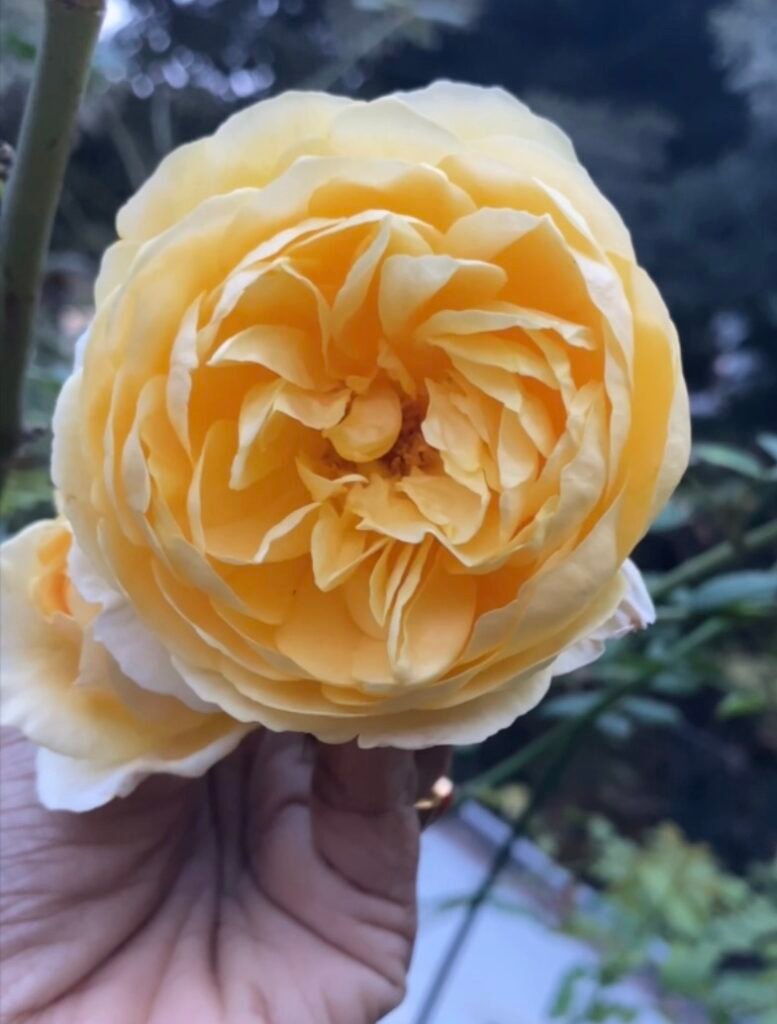
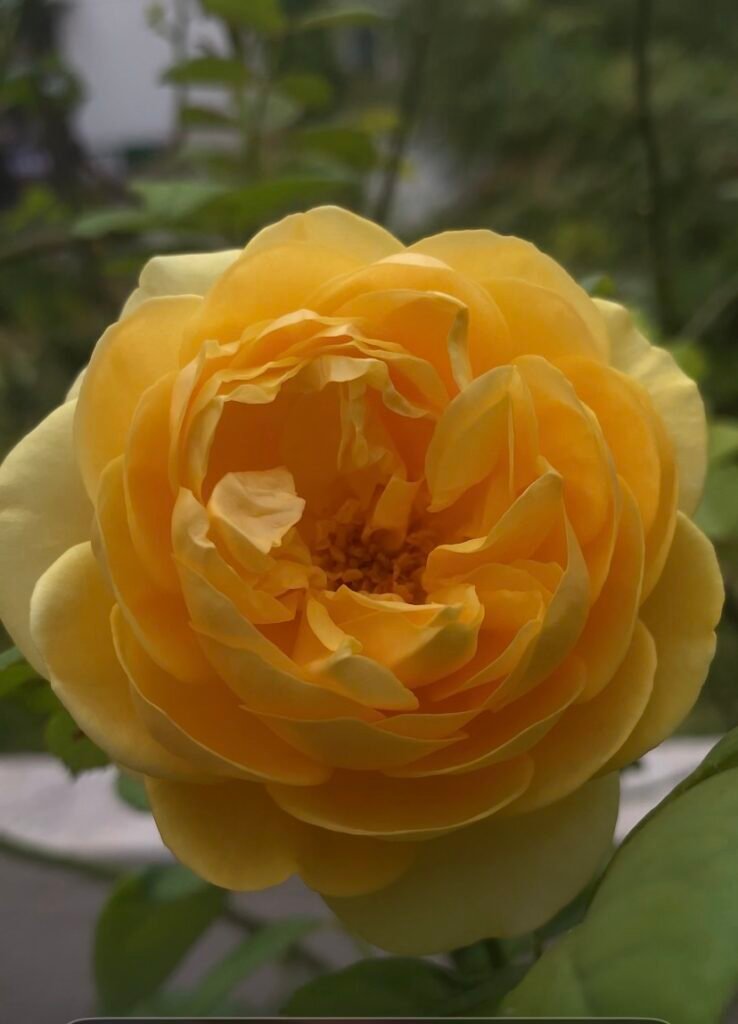
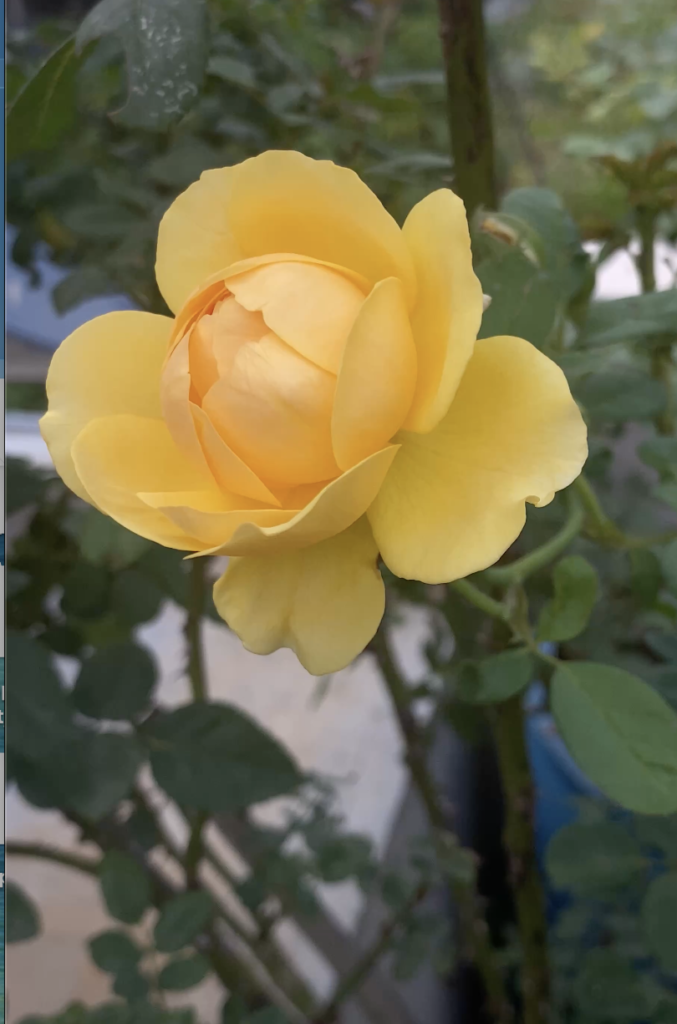
If I had to choose just one yellow David Austin rose, it would undoubtedly be Golden Celebration. In fact, yellow has always been my favourite flower colour, and this rose perfectly captures everything I love about it. The rich, deep golden-yellow blooms are simply breathtaking.
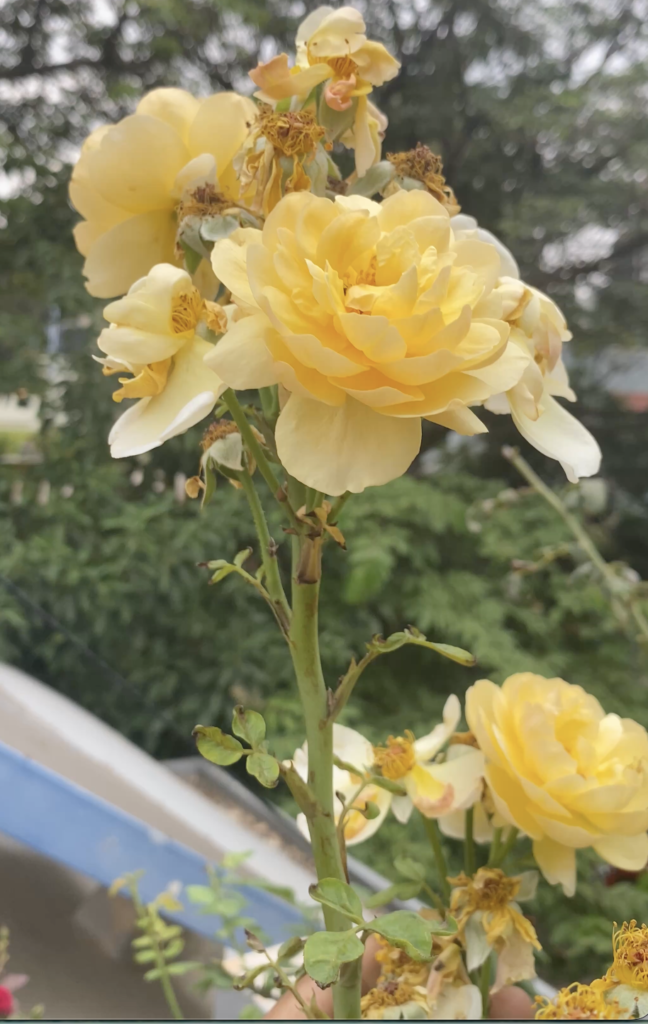
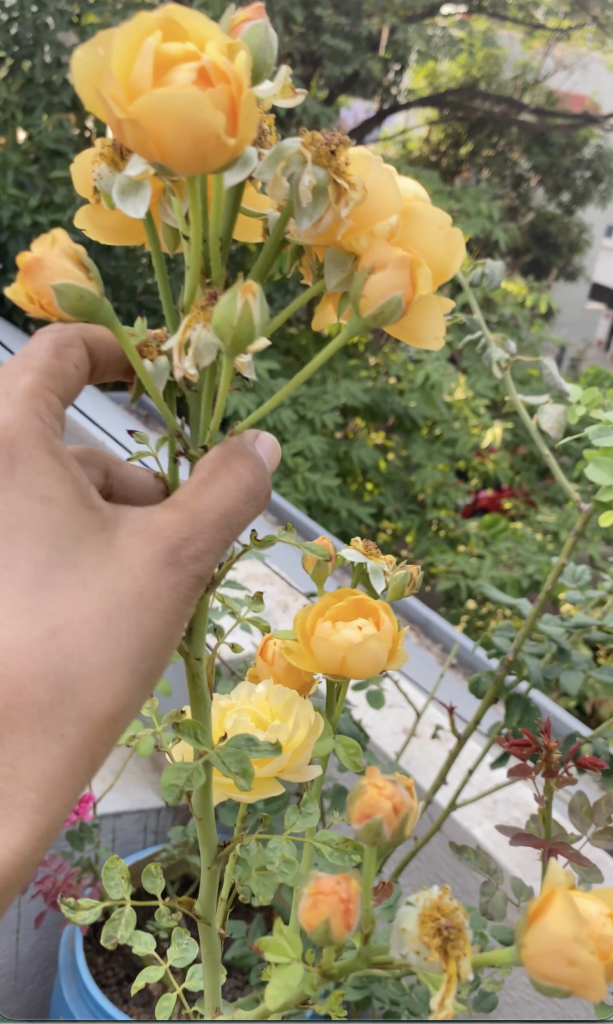
Its flowers are huge, beautifully cupped, and filled with countless neatly packed petals, creating an elegant, old-fashioned appearance. Every bloom looks luxurious, and whenever this rose flowers, it instantly becomes the centre of attention in my terrace garden.
David Austin describes the fragrance as a strong tea scent. However, in my garden, I would describe it as a medium tea fragrance. Although it isn’t as powerful as I expected, the fragrance is still fresh, pleasant, and enjoyable, especially during the cooler months.
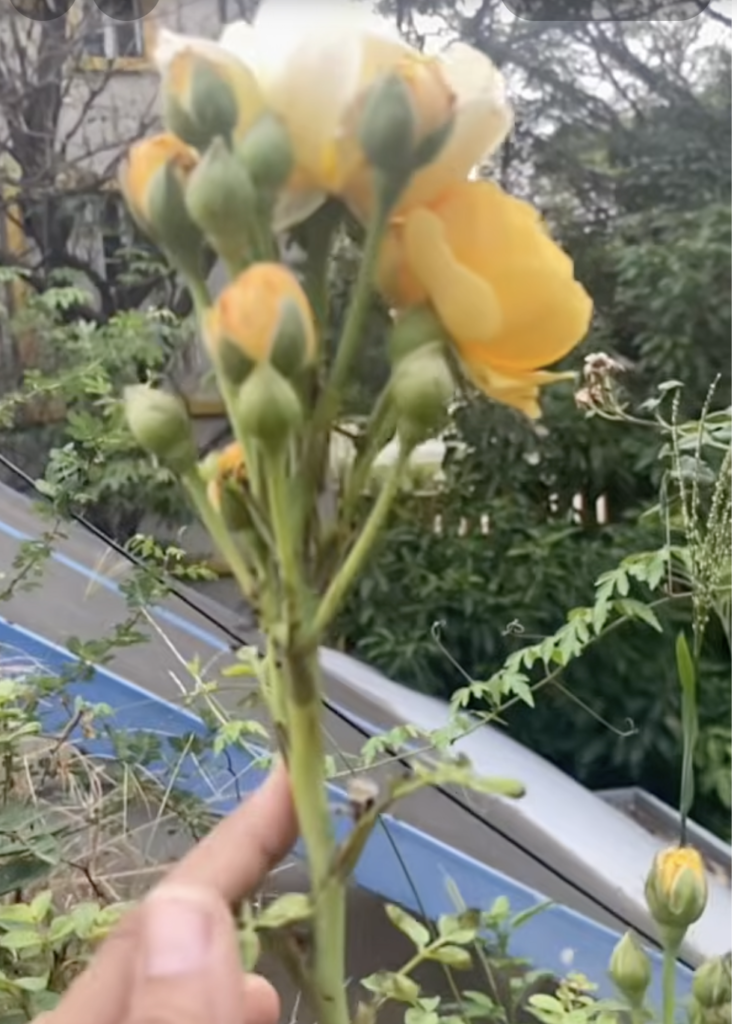
According to David Austin, Golden Celebration typically grows to about 4–4½ feet. Surprisingly, in Bangalore’s Zone 10b climate, my plant has grown to almost 7 feet tall. Because of its vigorous growth and long, arching canes, I personally consider it more suitable to be trained as a small climber rather than maintained as a compact shrub.
One thing that has impressed me the most is its performance in our hot climate. In my opinion, Golden Celebration thrives exceptionally well in warm tropical conditions. It has shown excellent vigour, produces healthy growth throughout the year, and has been one of the most disease-resistant David Austin roses in my collection.
I grow this rose in a recycled water drum measuring approximately 14 inches wide and 20 inches deep. I also keep the soil covered with about 2 inches of coconut chip mulch, which helps conserve moisture, keeps the root zone cooler during summer, and improves the overall health of the plant. Even during Bangalore’s intense summer, this simple practice has worked very well for me.
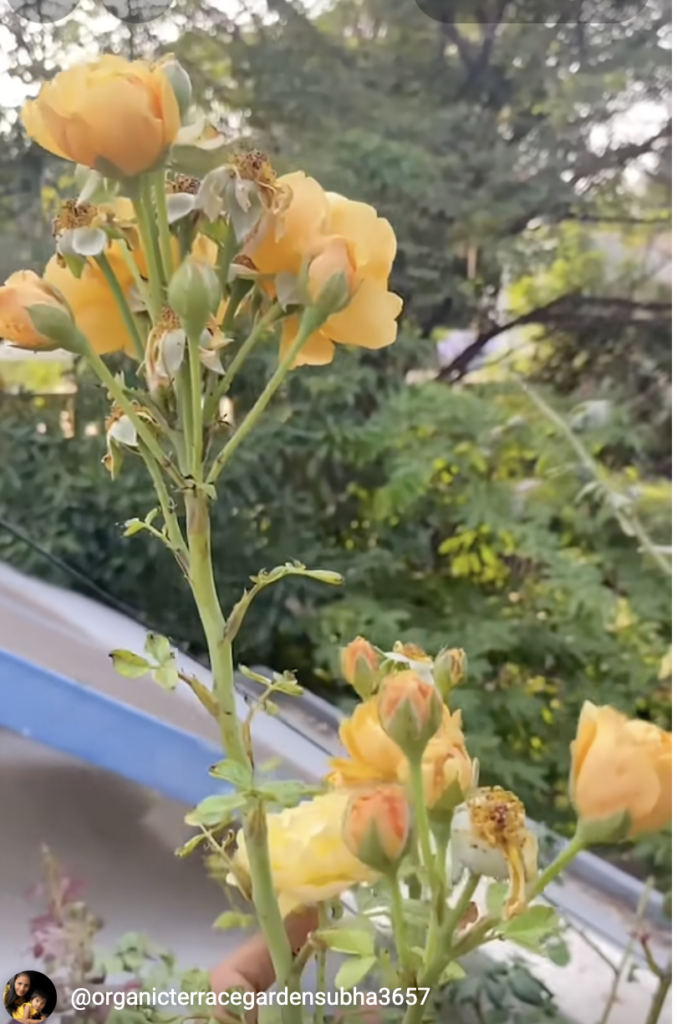
There is only one aspect that disappoints me. In my garden, Golden Celebration is not a strong repeat bloomer. Its main flowering season is from late April until July, with the biggest flush usually occurring during late April and May.
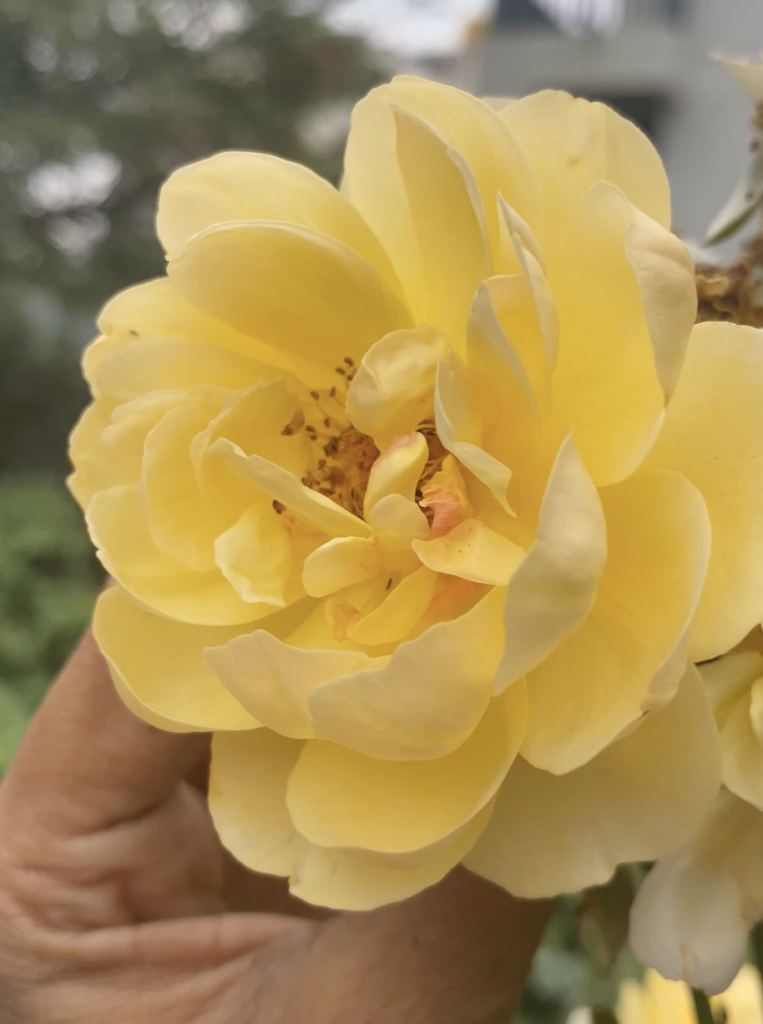
The unfortunate part is that this peak flowering period coincides with Bangalore’s hottest weather, where temperatures often reach 38–40°C. Although the plant continues to thrive and produces spectacular clusters of flowers, the extreme heat affects the quality of the blooms. Compared with cooler weather, the flowers become smaller, the golden colour is less intense, the fragrance is lighter, the bloom form becomes looser, and the flowers fade much more quickly.
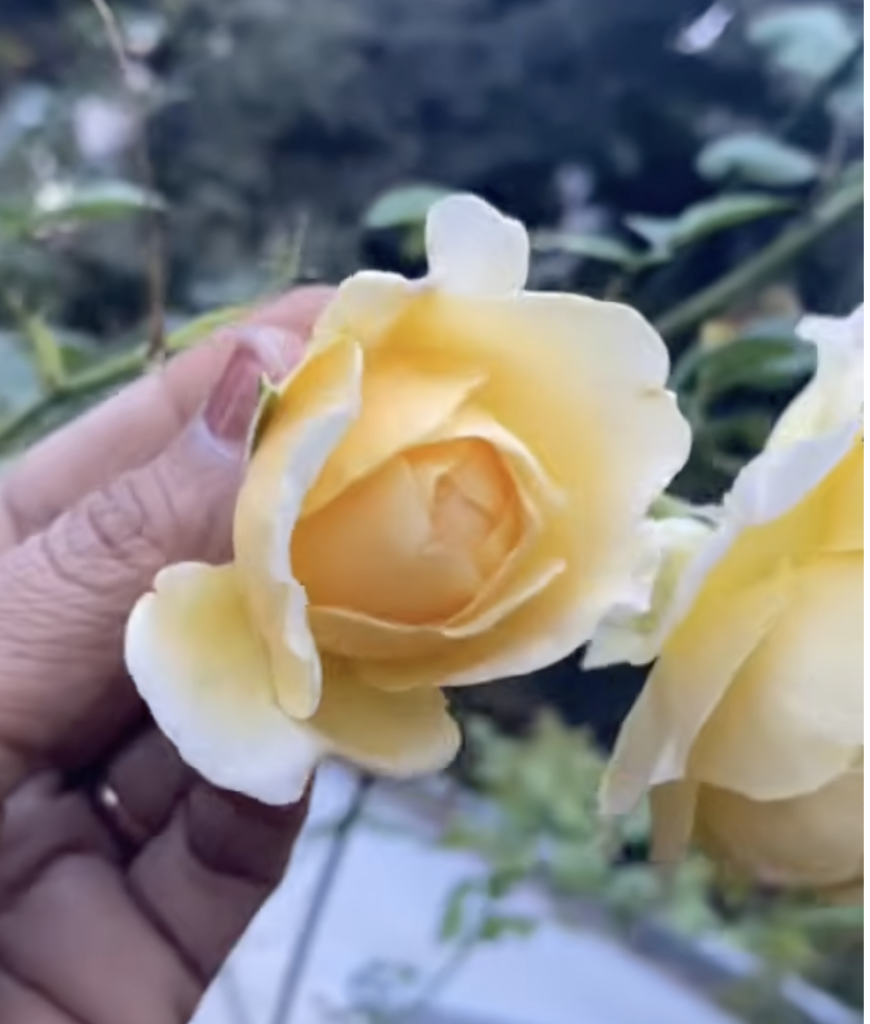
However, every now and then, Golden Celebration surprises me by producing a few blooms during winter. Usually there are only two to four flowers, but those few blooms are absolutely stunning. The colour becomes richer and deeper, the fragrance is noticeably stronger, the flowers hold their perfectly cupped shape much longer, and they remain fresh for several extra days before fading.
Whenever I see those winter blooms, I can’t help but wonder how magnificent this rose would be if its main flowering season occurred during the cooler months instead of peak summer.
Because of this, I have decided to try a different approach. This year, I plan to hard prune the plant at the end of September instead of following my usual schedule. My hope is that it will produce vigorous new shoots throughout October and begin flowering from November to January, when the weather is much cooler.
After pruning, I feed the plant with a handful of well-composted goat manure, one tablespoon of bone meal, and seaweed extract. Seaweed naturally contains auxins and cytokinins, plant hormones that encourage vigorous new growth, healthy leaves, and strong basal shoots. I’m hoping this combination will encourage the plant to produce more flowering stems for winter.
Will this experiment work? Honestly, I don’t know yet—and that’s one of the things I love most about gardening. Every season teaches me something new. Sometimes my experiments succeed, sometimes they don’t, but every experience helps me understand my roses a little better.
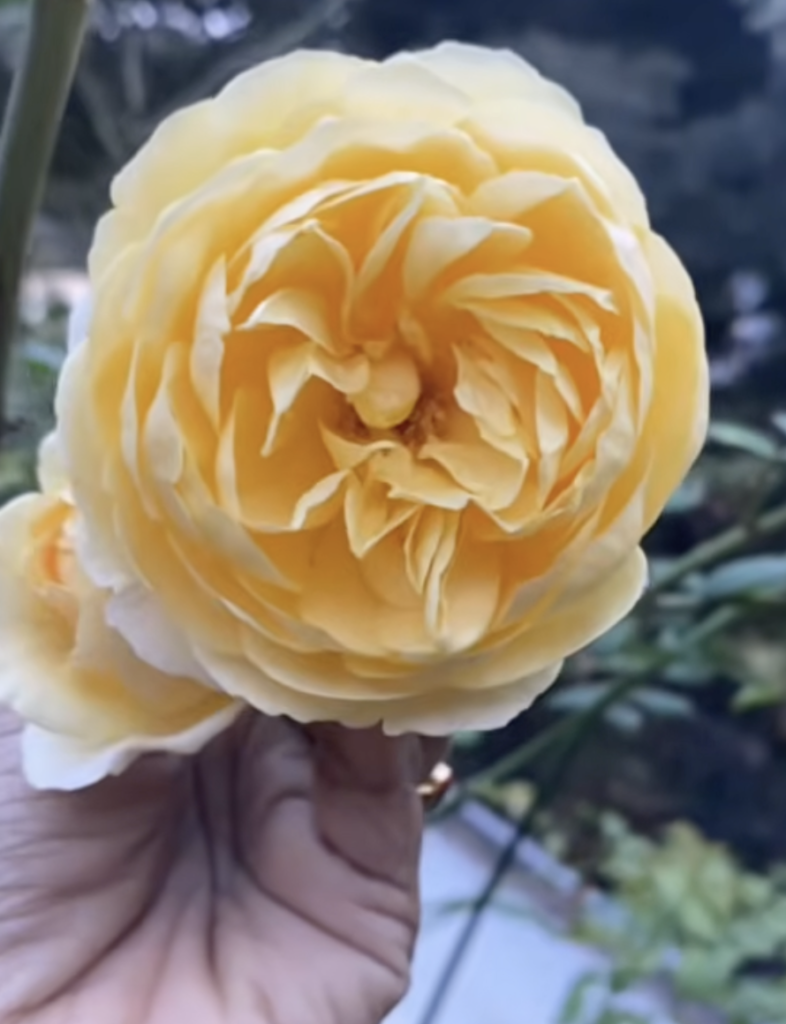
I’ve included photographs of both my summer flower clusters and my winter blooms. Take a close look at them and compare the differences for yourself. I think you’ll clearly notice how dramatically the season influences the flower size, colour intensity, bloom form, and overall beauty of this remarkable rose.
For me, Golden Celebration will always remain one of the most beautiful David Austin roses ever introduced. Despite our challenging climate, it continues to reward me with breathtaking blooms year after year. It is, without a doubt, one of the true stars of my terrace garden and a rose that I will always cherish.
I hope my personal experiences help other gardeners, especially those growing roses in warm tropical climates like Bangalore (Zone 10b). If this article has been helpful, I’d love for you to continue exploring my website and follow my gardening journey as I share more experiences, successes, failures, and practical tips from my own garden.
Happy Gardening! 🌹


where can I / did you find David Austin in Bangalore?
From ksgson bangalore through mail only mam.
And colours of likitha through whats app Ph: 99005 97635
Is the fragrance also just the same?
No, this one has a tea fragrance, and the next day I noticed a slight fruity fragrance added to it. 😊 Thank you! ❤️